3D Love Design for Valentines Day: A Comprehensive Evaluation
In the digital landscape, visual communication has become a primary driver of engagement. As Valentine's Day approaches, designers and content creators are constantly seeking ways to convey romance, affection, and celebration through imagery. One of the most prominent trends emerging in this sector is 3D Love Design for Valentines Day. This approach moves beyond traditional flat graphics, utilizing depth, lighting, and texture to create immersive romantic visuals. This article evaluates the utility, benefits, and considerations of incorporating these designs into your projects.
Understanding 3D Love Design for Valentines Day
3D Love Design for Valentines Day refers to the creation of digital artwork that simulates three-dimensional space to depict romantic themes. Unlike vector illustrations that rely on flat lines and solid colors, 3D designs utilize modeling software to render objects with volume. In the context of Valentine's Day, this often manifests as shiny 3d vector heart models, isometric 3D icons, and complex landscapes.
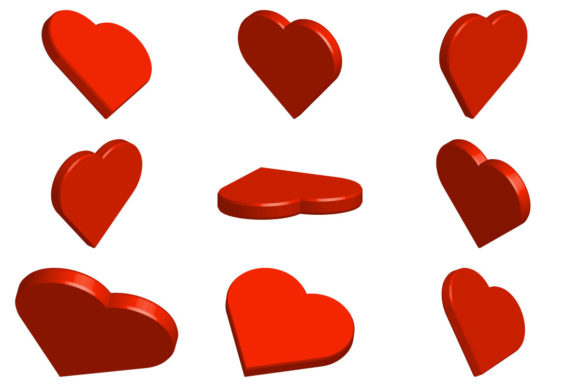
A common variation involves a set love object with some models for valentine design. These collections typically feature multiple elements—such as hearts, arrows, flowers, and gift boxes—rendered with consistent lighting and perspective. The inclusion of red hearts different 9 rotation allows for dynamic composition, where the same asset can be viewed from various angles to create a sense of movement and realism. Furthermore, the use of pink 3D heart vector backgrounds provides a soft yet modern aesthetic that differs significantly from the stark contrast of 2D art.
Reasons for Interest in 3D Romantic Imagery
Designers and marketers are increasingly turning to 3D assets for several practical reasons. The primary driver is the ability to capture attention in a crowded digital environment. Shiny 3d vector heart graphics possess a tactile quality that mimics real-world materials like glass, metal, or plastic. This realism triggers a psychological response that flat images often fail to achieve.
Additionally, the versatility of these assets supports various applications. A Valentine romantic background created in 3D can be easily adapted for web headers, social media stories, packaging, and even physical print materials. The isometric 3D icon vector illustration style, for instance, offers a structured look that works well for infographics or UI design, while still maintaining the festive theme.
Benefits of Implementing 3D Designs
- Enhanced Visual Depth: 3D designs naturally draw the eye due to their shading and perspective. This makes them ideal for call-to-action buttons or featured banners where visibility is critical.
- Modern Aesthetic: The trend towards 3D graphics signals a contemporary brand identity. Using a pink 3D heart vector suggests a forward-thinking approach to design rather than relying on clichéd clipart.
- Flexibility in Composition: With tools allowing for red hearts different 9 rotation, designers can rearrange elements without losing quality. This scalability ensures that the image remains crisp whether viewed on a mobile screen or a large billboard.
- Emotional Resonance: The glossy finish and soft gradients found in shiny 3d vector hearts often evoke feelings of warmth and luxury, aligning well with the emotional tone of Valentine's Day campaigns.
Tradeoffs and Considerations
While the advantages are significant, adopting 3D Love Design for Valentines Day comes with specific tradeoffs that must be weighed against project goals.
File Size and Performance: High-quality 3D renders and complex vector files can result in larger file sizes compared to simple 2D illustrations. For websites with strict performance requirements, heavy assets may slow down load times, potentially impacting user experience and search engine rankings. Optimization is essential to mitigate this risk.
Technical Expertise: Creating custom 3D assets requires specialized skills in modeling and rendering software. If a team lacks this expertise, they may need to rely on pre-made assets, which could limit originality. Alternatively, outsourcing the work increases costs and timelines.
Style Consistency: Integrating 3D elements into a brand that traditionally uses flat design can sometimes create a disjointed visual identity. It is crucial to ensure that the lighting, texture, and color palette of the 3D love object with some models for valentine design harmonize with existing brand guidelines.
Situations Where 3D is a Strong Fit
This design approach is particularly effective in scenarios where high impact and novelty are required. E-commerce platforms selling gifts, jewelry, or chocolates benefit greatly from isometric 3D icon vector illustration styles that showcase products in an appealing, tangible way. The depth allows customers to visualize the product better, potentially increasing conversion rates.
Digital marketing campaigns aiming for virality also stand to gain. Social media algorithms often favor content that stops the scroll. A Valentine romantic background featuring a shiny 3d vector heart is more likely to engage users than a standard photograph or flat graphic. Similarly, event invitations or digital greeting cards can leverage the "red hearts different 9 rotation" concept to create interactive experiences where the viewer can rotate the card to see different perspectives.
When Alternatives May Be Worth Considering
Despite its strengths, 3D design is not universally applicable. For minimalistic brands or projects with limited budgets, traditional vector illustration or hand-drawn art might be more appropriate. Flat design often conveys clarity and simplicity faster than 3D renders, which can sometimes appear cluttered if overused.
If the target audience prefers a nostalgic or retro aesthetic, the polished look of a shiny 3d vector heart might feel out of place. In such cases, a vintage-inspired 2D style could better resonate with the intended demographic. Additionally, for projects requiring rapid iteration or frequent updates, the time-consuming nature of adjusting 3D parameters may make flat vector sets a more practical choice.
Practical Decision-Making Insights
To determine whether 3D Love Design for Valentines Day aligns with your specific needs, consider the following decision framework:
- Define the Goal: Are you trying to drive sales, build brand awareness, or simply celebrate? High-conversion goals often justify the investment in 3D assets.
- Assess Technical Constraints: Review your platform's capabilities. Can your website handle the file size of complex 3D backgrounds without compromising speed?
- Evaluate Brand Identity: Does the glossy, dimensional style fit your brand voice? If your brand is known for being grounded and serious, a playful 3D heart might dilute your message.
- Consider Resource Availability: Do you have the internal resources to create or customize these assets, or will you need to purchase licenses? Ensure the cost-benefit analysis supports the expenditure.
Conclusion
The evolution of digital art has provided designers with powerful tools to express emotion and creativity. 3D Love Design for Valentines Day represents a significant shift towards more immersive and engaging visual storytelling. By offering depth, realism, and a modern touch, it stands out as a compelling option for those looking to elevate their Valentine's Day content.
However, success depends on strategic implementation. Whether utilizing a set love object with some models for valentine design or focusing on a single shiny 3d vector heart, the key lies in balancing aesthetic appeal with technical efficiency. By carefully evaluating the tradeoffs and aligning the design choice with clear objectives, creators can harness the power of 3D to deliver memorable and effective romantic visuals.