Integrating Snapchat Icon 3D PSD Design into Modern Creative Workflows
In the fast-paced environment of digital marketing and social media management, visual consistency is not merely an aesthetic choice; it is a strategic necessity. Professionals aged 20 to 50 who manage brand identities or create content for platforms like Snapchat understand that every pixel contributes to user recognition. This is where Snapchat Icon 3D PSD Design becomes a critical asset in the creative toolkit. Unlike flat vector graphics or pre-rendered images, a PSD file offers a layered, editable source that allows for deep customization without losing quality.
The value of this specific design resource lies in its flexibility during the implementation phase. Whether you are a freelancer preparing a pitch deck, a small business owner refreshing a social media profile, or a marketer launching a new campaign, having access to the raw design data ensures that your visual output aligns perfectly with your broader goals. The ability to manipulate shadows, lighting, and depth within the Snapchat icon 3D PSD design means you can adapt a single asset to fit various contexts, from app store screenshots to promotional banners.
Understanding the Core Asset and Its Technical Foundation
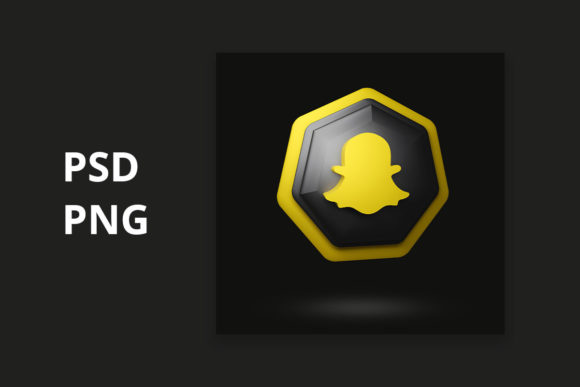
Before diving into workflow integration, it is essential to define what constitutes a high-quality Snapchat Icon 3D PSD Design. At its core, this file type combines the raster capabilities of Photoshop with the structural integrity required for complex 3D rendering. While the final deliverable often includes an EPS file for scalable printing, the PSD serves as the primary working document. It contains individual layers for the ghost mascot, the background gradients, the glow effects, and the shadowing components.
This separation of elements is vital for professionals who need to maintain control over their assets. When you open a standard JPEG or PNG, you are stuck with a flattened image. However, opening the Snapchat icon 3D PSD design reveals a hierarchy of objects. You can adjust the opacity of the ghost's outline, change the color of the background gradient to match a specific brand palette, or alter the perspective of the 3D element to suit a dynamic layout. This level of granularity transforms a static logo into a versatile component of a larger design system.
Compatibility and File Management Strategies
Efficiency in any professional workflow depends heavily on how well tools interact with one another. The Snapchat Icon 3D PSD Design is designed to be compatible with Adobe Photoshop, but its utility extends beyond just the software itself. To maximize usability, it is crucial to organize these files correctly within your project directory structure. A chaotic file system can lead to version control issues, where outdated icons replace current branding materials.
When implementing this asset, consider the following organizational factors:
- Layer Naming Conventions: Ensure that layers within the PSD are clearly labeled (e.g., "Ghost_Shadow," "Background_Glow"). This prevents confusion when multiple team members collaborate on the same project.
- Version Control: Maintain a master copy of the Snapchat icon 3D PSD design that remains untouched. Create working copies for each specific campaign or client to preserve the integrity of the original source.
- Export Settings: Define clear export protocols. Determine which formats are needed for web (PNG-24), print (EPS), and social media (optimized JPG) before beginning the design process.
By establishing these standards early, you reduce the time spent troubleshooting technical errors and increase the speed of execution. This preparation is particularly important for agencies handling multiple clients, where consistency across different projects is a key metric of success.
Strategic Application Across the Creative Lifecycle
The true power of a Snapchat Icon 3D PSD Design is realized when it is integrated into the various stages of a project lifecycle. It is not simply a graphic to be placed at the end of a timeline; it acts as a foundational element that influences planning, execution, and review.
Pre-Production: Planning and Conceptualization
During the planning phase, designers and strategists often use mockups to visualize how a brand will appear across different touchpoints. The Snapchat icon 3D PSD design is ideal for creating these realistic previews. Because the file supports 3D manipulation, you can simulate how the icon appears on mobile devices, tablets, and even physical merchandise. This helps stakeholders make informed decisions about branding direction before any actual development or production begins.
For entrepreneurs and small business owners, this stage is about validation. By presenting a high-fidelity representation of the Snapchat presence using the PSD, you can gauge audience reaction and refine the concept. It bridges the gap between abstract ideas and tangible reality, ensuring that the final product meets expectations.
Production: Execution and Customization
Once the plan is approved, the focus shifts to execution. This is where the layered nature of the Snapchat Icon 3D PSD Design shines. In a typical workflow, a designer might need to create a series of variations for an A/B test. With the PSD, changing the icon's color to match a seasonal theme or adjusting the 3D tilt to match a specific layout requires only a few clicks rather than recreating the entire graphic from scratch.
This efficiency is critical for marketers managing tight deadlines. Instead of waiting for a third-party vendor to generate new assets, in-house teams can utilize the Snapchat icon 3D PSD design to produce high-quality variations instantly. Furthermore, the inclusion of an EPS file allows for seamless transition to print media. If a campaign involves physical flyers or posters, the vector-based EPS ensures the icon remains crisp regardless of the size, while the PSD handles the digital nuances.
Post-Production: Analysis and Iteration
The workflow does not end once the assets are published. In the post-production phase, data analysis often reveals opportunities for optimization. Perhaps the icon needs to be slightly brighter to improve visibility on dark mode interfaces, or the shadow needs to be reduced for better readability on smaller screens. Having the original PSD accessible allows for rapid iteration based on performance metrics.
This feedback loop is essential for maintaining relevance. Social media trends evolve quickly, and a static image cannot keep up. The flexibility of the Snapchat Icon 3D PSD Design ensures that your visual identity can adapt to changing platform requirements or algorithm updates without requiring a complete redesign.
Collaboration and Cross-Platform Integration
In modern teams, design rarely happens in isolation. The Snapchat icon 3D PSD design must integrate smoothly with other tools and resources used by developers, writers, and project managers. For instance, when handing off designs to a developer for app integration, the PSD provides the necessary context for UI/UX implementation. Developers can inspect the layer styles to replicate the 3D effects using CSS or SVG code if needed.
Similarly, for educators and content creators, these assets serve as teaching tools. Demonstrating how a 3D effect is constructed using layers can help students understand the principles of depth, lighting, and composition. The transparency of the PSD file demystifies the design process, making it easier to transfer knowledge and skills across the team.
Furthermore, the compatibility of the file format facilitates collaboration across different operating systems and software versions. As long as the recipient has access to Adobe Photoshop or a compatible alternative, the Snapchat Icon 3D PSD Design remains a universal language for visual communication. This reduces friction in remote work environments where team members may be scattered across different locations and time zones.
Ensuring Quality and Long-Term Usability
Maintaining high standards is a continuous process. When working with a Snapchat Icon 3D PSD Design, quality control should be built into every step of the workflow. Regular audits of the file structure ensure that unused layers are cleaned up and that the file size remains manageable. Large, bloated PSD files can slow down performance and complicate sharing processes.
Additionally, consider the long-term implications of your design choices. Trends in 3D design shift frequently. What looks cutting-edge today might feel dated in a year. However, by starting with a robust PSD structure, you can easily update specific elements—such as the texture or lighting style—without discarding the entire asset. This approach promotes sustainability in design, reducing waste and saving resources over time.
For professionals focused on productivity, the ability to reuse and repurpose assets is a significant advantage. The Snapchat icon 3D PSD design is not a one-off item; it is a reusable component that can be adapted for future campaigns, rebranding efforts, or personal projects. By treating it as a living asset rather than a static image, you unlock its full potential.
Practical Tips for Seamless Implementation
To get the most out of this resource, adopt a disciplined approach to its usage. Start by familiarizing yourself with the layer groups and adjustment layers provided in the file. Experiment with blending modes to see how they affect the overall look. Test the icon against different backgrounds to ensure contrast and visibility are maintained. Finally, always save your work in a non-destructive manner, preserving the original PSD alongside your exported versions.
Ultimately, the goal is to create a workflow where the tool serves the vision, not the other way around. By mastering the Snapchat Icon 3D PSD Design and understanding its role in the broader creative ecosystem, professionals can enhance their output, streamline their processes, and deliver results that resonate with their audiences. Whether you are a seasoned expert or a hobbyist looking to elevate your skills, this asset offers the foundation for professional-grade design execution.