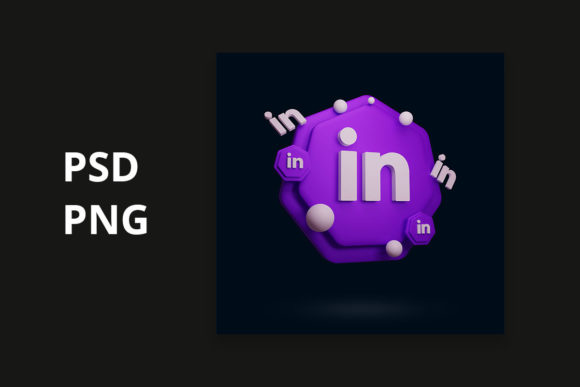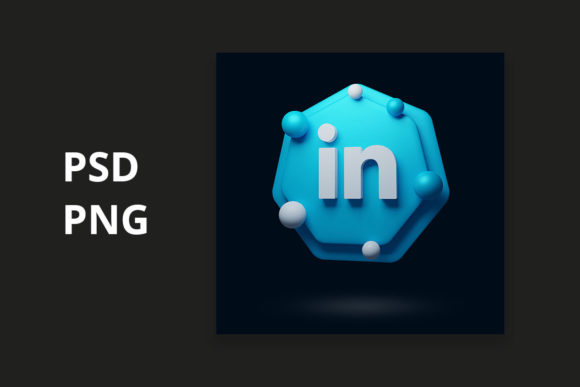
LinkedIn 3D Icon Design: Elevating Your Professional Presence with Depth and Detail
In a digital landscape where attention is the most scarce resource, your profile picture or company logo often does the heavy lifting before you even write a single word. This is where LinkedIn 3D icon design transforms from a mere aesthetic choice into a strategic asset. Unlike flat graphics that can sometimes get lost in a sea of two-dimensional images, a well-crafted 3D icon adds dimension, texture, and a sense of modernity that immediately signals professionalism and creativity.
When we talk about LinkedIn 3D icon design, we aren't just discussing a pretty image. We are talking about a versatile visual tool available in industry-standard file formats like PSD (Photoshop Document) and EPS (Encapsulated PostScript). These formats are critical because they provide the flexibility needed for everything from quick social media updates to high-resolution print materials. Whether you are a freelancer trying to stand out on a crowded feed or a startup founder looking to brand a new product line, understanding how to leverage these designs can make a tangible difference in how you are perceived.
Why Dimension Matters in Professional Branding
The human brain processes depth faster than flat shapes. When you scroll through LinkedIn, your eyes naturally gravitate toward elements that pop off the screen. A flat vector might look clean, but a 3D icon with subtle shadows, gradients, and lighting effects creates a tactile feeling. It suggests that the person or brand behind it pays attention to detail and stays current with design trends.
This isn't about following a fleeting fad; it's about communication. In a professional setting, a 3D icon can convey complex ideas quickly. For instance, a 3D representation of a shield can instantly communicate "security" more effectively than a simple outline. Similarly, a floating gear or a glowing lightbulb can symbolize innovation or problem-solving without requiring a single sentence of explanation. By using LinkedIn 3D icon design, you are speaking a visual language that resonates with both technical and non-technical audiences.
Real-World Scenarios for Using 3D Icons
To truly understand the value of these assets, let's look at how different professionals actually use them in their daily workflows. The applications go far beyond just changing a profile picture.
- Freelancers and Consultants: Imagine a graphic designer or a copywriter updating their portfolio. Instead of a static list of services, they can use a set of custom 3D icons to represent their offerings—like a 3D pen for writing, a camera for photography, or a chart for analytics. When a potential client clicks on their profile, these icons break up the text and guide the eye to key skills, making the profile feel organized and premium.
- SaaS Founders and Tech Startups: For entrepreneurs launching a new app, 3D icons are essential for landing pages and pitch decks. If you are presenting to investors, a slide deck featuring high-quality PSD files of your product features looks significantly more polished than one relying on generic clip art. The depth in the design implies a robust, fully realized product rather than a concept.
- Educators and Content Creators: Teachers and course creators often struggle to make their digital content engaging. By incorporating 3D icons into course thumbnails or presentation slides, they can create a cohesive visual theme. A teacher explaining a complex topic in history might use a 3D globe or artifact to anchor the lesson visually, helping students retain information better.
- Small Business Owners: Local businesses expanding their online presence need to look established. A coffee shop owner promoting a new loyalty program on LinkedIn can use a 3D coffee cup icon to grab attention in the newsfeed. Because the file is available in EPS format, they can scale this image up for a large banner ad at a trade show without any loss of quality.
The Power of PSD and EPS Formats
Choosing the right file type is just as important as the design itself. When you acquire LinkedIn 3D icon design resources, the availability of both PSD and EPS files offers distinct advantages depending on your workflow.
PSD files are the bread and butter of designers working within Adobe Photoshop. They allow for layer-based editing, meaning you can change colors, adjust lighting effects, or swap out specific elements without redrawing the entire icon. If you are a marketer who needs to A/B test different color schemes for your ads, having the source PSD file means you can tweak the design in minutes rather than hours. This flexibility is crucial for dynamic campaigns where speed matters.
EPS files, on the other hand, are vector-based. This makes them ideal for situations where scaling is required. If you plan to print your 3D icons on business cards, brochures, or large-format signage, the EPS format ensures that the edges remain crisp regardless of the size. You don't have to worry about pixelation or blurriness. This dual-format availability ensures that whether your project is digital-first or print-heavy, your visual assets will perform perfectly.
Strategic Considerations Before You Apply
While the benefits are clear, successful implementation requires thoughtfulness. Throwing a flashy 3D icon onto every piece of content you create won't necessarily boost engagement if it doesn't align with your message. Here are practical factors to consider before downloading or applying these designs.
Consistency is Key: Your visual identity should be cohesive. If your personal brand uses a minimalist style, a hyper-realistic, colorful 3D icon might clash. Choose a design that complements your existing color palette and typography. The goal is to enhance your brand, not distract from it. Ensure that the lighting direction and shadow styles match across all your icons so they feel like part of a unified system.
Contextual Relevance: Ask yourself what story you are telling. If you are a data analyst, a 3D bar chart or database icon works well. If you are a creative director, an abstract shape or artistic brush might be more appropriate. The icon must reinforce the narrative of your post or profile. Using a generic "tech" icon for a role focused on "human connection" can send mixed signals.
File Management and Optimization: High-quality 3D designs can result in large file sizes. Before uploading to LinkedIn or embedding in a website, ensure you optimize the final image for web use to maintain fast load times. While the source files (PSD/EPS) are for editing, the exported versions used for publishing should be lightweight JPEGs or PNGs to prevent users from skipping over your content due to slow loading speeds.
Bridging the Gap Between Creativity and Functionality
Ultimately, the best LinkedIn 3D icon design projects are those that serve a functional purpose while looking great. They act as visual anchors in a text-heavy environment, breaking up monotony and guiding the user's journey through your content. Whether you are building a personal brand, marketing a B2B service, or sharing educational resources, the ability to customize and scale your visuals gives you a competitive edge.
By leveraging the versatility of PSD and EPS formats, you gain the freedom to adapt your visuals to any platform or medium. You stop being a passive consumer of templates and become an active creator of your own professional narrative. In a world where first impressions happen in milliseconds, investing time in finding the right 3D assets is an investment in your career growth and brand recognition.
So, the next time you update your profile or prepare a presentation, think beyond the flat. Embrace the depth, play with the layers, and let your 3D icons do the work of communicating your unique value proposition before you even hit "post." That is the true power of thoughtful, strategic design.