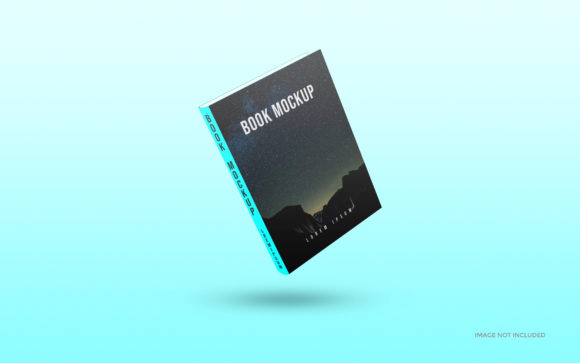
Transforming Book Cover Mockup Design 3D Rendering into a Sales Strategy
In the rapidly evolving landscape of digital commerce, the visual presentation of a product often dictates its perceived value more than the content itself. This is particularly true for creators selling online courses, e-books, and comprehensive digital packages. When potential customers browse a marketplace or a landing page, they are not just purchasing information; they are buying an experience. The first point of contact in this experience is the visual asset, specifically the Book Cover Mockup Design 3D Rendering. Moving beyond flat, two-dimensional images to three-dimensional representations allows sellers to bridge the gap between a simple file download and a tangible, high-quality product.
The shift toward photorealistic rendering has become a standard expectation rather than a luxury. A static image on a screen can feel ephemeral, but a 3D Rendering Book Cover Design PSD file simulates the tactile nature of a physical object. This psychological cue suggests professionalism, effort, and legitimacy. For professionals, educators, and business owners looking to sell their digital products extensively, understanding how to leverage these tools is essential for maximizing conversion rates and establishing brand authority.
The Strategic Value of Photorealistic Visuals
Why does the industry place such a heavy emphasis on three-dimensional mockups? The answer lies in cognitive psychology and user behavior. When a consumer encounters a flat JPEG of a book cover, their brain processes it as a graphic element. However, when presented with a high-fidelity 3D render that includes lighting, shadows, spine thickness, and paper texture, the brain registers it as a real-world object. This phenomenon, known as mental simulation, encourages the buyer to imagine holding the product, flipping through the pages, and engaging with the material.
This distinction is critical for digital products that lack physical form. An online course or a software bundle exists only as code and data until it is packaged visually. By utilizing advanced Book Cover Mockup Design 3D Rendering, creators give their intangible assets a physical weight. This perceived tangibility reduces the hesitation associated with buying something invisible. It signals that the creator has invested time and resources into the packaging, which often translates to trust in the quality of the underlying content.
Furthermore, in crowded marketplaces like Amazon Kindle Direct Publishing, Udemy, or Etsy, visual differentiation is the primary method of capturing attention. A generic cover gets lost in the scroll. A professionally rendered 3D mockup stands out because it mimics the aesthetic of best-selling physical books. This consistency with established market standards helps new entrants compete with larger publishers who have dedicated design teams.
Understanding the Mechanics of PSD Templates
At the core of creating these stunning visuals is the Photoshop Document (PSD) file. These files are not merely images; they are complex, layered structures designed for flexibility. A high-quality 3D Rendering Book Cover Design PSD file utilizes Smart Objects. This technology is the key to efficiency and customization. Smart Objects allow designers to embed their artwork into the 3D scene without altering the original resolution or integrity of the design.
When a user opens such a file, they are presented with a well-organized layer structure. This organization is vital for anyone, regardless of their technical expertise. The layers typically include:
- Smart Object Layers: These contain the front cover, back cover, and spine. Users simply double-click these layers to insert their own designs, which automatically map onto the 3D surface.
- Lighting and Shadow Adjustments: Pre-configured adjustment layers that control the mood, intensity, and direction of light hitting the book.
- Background Elements: Textures such as wood, marble, or fabric surfaces that provide context and depth.
- Camera Angles: Different perspectives, such as isometric views, angled shots, or flat lays, all contained within a single document.
This architecture means that a user does not need to understand 3D modeling software like Blender or Cinema 4D. They do not need to rig models or calculate ray-tracing paths. Instead, they focus entirely on their creative output—their cover art—and let the template handle the complex geometry and rendering engine calculations. This democratization of 3D design allows hobbyists, researchers, and small business owners to produce results that previously required expensive studio equipment.
Practical Applications Across Industries
The utility of Book Cover Mockup Design 3D Rendering extends far beyond traditional publishing. While authors naturally use these tools for novels and textbooks, the application is broader and more diverse. Any entity selling a structured knowledge product benefits from the visual credibility that a 3D render provides.
Educators and Course Creators often struggle to visualize their offerings. A video module or a PDF workbook is hard to "sell" in a thumbnail. By wrapping their course materials in a 3D book mockup, they create a sense of curriculum and structure. It transforms a collection of files into a cohesive learning journey. Imagine a professional development course on leadership; presenting it as a sleek, leather-bound volume in a 3D render suggests prestige and actionable wisdom.
Software and Service Providers also find value here. Digital services, such as consulting packages or SaaS subscriptions, can be bundled into a "Digital Product Package." Using a 3D Rendering Book Cover Design PSD file, these providers can create a branded artifact that represents their service. It serves as a powerful marketing asset for email campaigns, social media ads, and landing pages. The visual anchor makes the abstract service concrete.
Researchers and Academics may not publish commercial books, but they often distribute white papers or research compilations. A polished 3D render elevates the status of academic work, making it appear more authoritative and ready for distribution. It adds a layer of polish that aligns with the rigor of the research itself.
The Workflow of Efficient Creation
The process of generating these assets is streamlined by modern templates, yet it requires a strategic approach to ensure the final output is effective. The workflow begins with the preparation of the source design. Before opening the PSD, the creator must ensure their artwork meets specific technical requirements. Since the goal is often a 4K Resolution 300 DPI output, the initial design should be created at a high enough resolution to withstand scaling.
Once the design is ready, the user imports it into the Smart Object layer of the PSD. This step is instantaneous. The software automatically handles the perspective distortion, ensuring the flat image wraps perfectly around the simulated book spine and curves. The next phase involves adjusting the environment. This is where the creativity truly shines. The user might choose a background that matches their brand colors or select a lighting preset that evokes a specific emotion—warm and inviting for fiction, cool and sharp for business guides.
A critical consideration in this workflow is the aspect ratio. Different platforms require different dimensions. A mockup intended for an Amazon thumbnail needs to be square, while one for a website banner might be panoramic. High-quality PSD files often include presets or guides to help users crop the final render correctly without losing important details. Because the file is vector-based or uses high-resolution smart objects, resizing the canvas does not degrade the image quality, maintaining the crisp edges necessary for print-on-demand or high-definition web displays.
Key Advantages for Digital Sellers
Adopting this methodology offers several distinct advantages over traditional image creation methods. The most immediate benefit is the reduction in production time and cost. Hiring a 3D artist for a single project can cost hundreds of dollars and take days to complete. With a pre-made template, the entire process can be condensed into minutes. This efficiency allows creators to test multiple variations of their covers quickly, enabling A/B testing to see which visual style resonates best with their audience.
Another significant advantage is the scalability of the design. Because the file is organized with editable layers, a single purchase can be used for an infinite number of projects. A creator can change the title, the author name, and the background image to create a series of mockups for a book trilogy or a multi-part course series without starting from scratch. This consistency builds a recognizable brand identity across all digital touchpoints.
The technical specifications of these files also ensure versatility. A 4K Resolution 300 DPI standard is crucial for two reasons: clarity and print readiness. Even if the product is digital, customers often expect to download a high-resolution version. Furthermore, many creators offer print-on-demand options alongside their digital downloads. Having a master file that is already optimized for print eliminates the risk of pixelation or blurriness when the customer receives the physical copy.
Addressing Technical Barriers
One common misconception is that creating 3D renders requires advanced technical skills. While 3D modeling software has a steep learning curve, the use of specialized PSD templates removes this barrier. The interface remains familiar to anyone who has used Adobe Photoshop. The complexity is hidden behind the scenes within the Smart Objects and layer effects.
However, users should be aware of the hardware requirements. Rendering high-resolution 3D elements can be demanding on computer memory. To ensure smooth performance, it is recommended to work on a system with adequate RAM and a dedicated graphics card. Additionally, saving the final file in the correct format is important. While working in PSD preserves the editability, exporting as a PNG or TIFF ensures maximum compatibility across web browsers and printing services.
Future Trends in Digital Product Packaging
As the digital economy matures, the demand for realistic visual representation will continue to grow. We are seeing a trend where "digital-only" products are being marketed with increasing emphasis on physical aesthetics. This is driven by the saturation of low-quality, generic templates. Consumers are becoming more discerning, and they can easily spot a poorly executed mockup.
The future lies in hyper-personalization and interactivity. While current PSD files are static, the next generation of tools may integrate dynamic elements, allowing users to rotate the book or view it from different angles directly in the browser. However, the foundation for these advancements is built upon the same principles of high-fidelity rendering and organized layer structures that exist today.
For now, mastering the use of Book Cover Mockup Design 3D Rendering is the most effective way to stay ahead of the curve. It represents a commitment to quality that separates professional enterprises from amateur hobbyists. Whether you are an educator launching a new certification program, a business owner bundling services, or an author releasing a memoir, the visual package is your first and most lasting impression.
By leveraging the power of 3D Rendering Book Cover Design PSD file technology, creators can transform their digital offerings into premium experiences. The ability to easily edit smart objects, organize layers, and achieve 4K resolution empowers anyone to produce world-class visuals. In a market where attention is the scarcest resource, the decision to invest in superior visual assets is not just an artistic choice; it is a strategic business imperative that drives engagement, builds trust, and ultimately increases sales.